Stability, freedom, and wisdom as the hidden virtues shaping political life
Modern political conflict often appears as a clash of ideologies. Yet beneath these disputes may lie deeper archetypal forces shaping human society. Drawing on Plato, astrology, and contemporary political developments, this essay explores how stability, freedom, and wisdom interact within the life of a civilisation.
Political disagreement has always been part of human society, but in recent years it has taken on a more existential character. Respect between opponents has eroded, and political positions are no longer experienced simply as differences in policy but as clashes between competing visions of reality itself. Individuals increasingly identify with ideological camps as if they were moral identities, and the possibility of genuine dialogue seems increasingly harder to attain.
It is tempting to attribute this to the mechanics of modern media or the intensifying pressures of global change. However, there may be something deeper at work. The intensity of political division suggests that these disputes stem from enduring patterns within human consciousness itself.
Over a century ago, the philosopher Rudolf Steiner suggested that political movements might be material reflections of deeper cosmological influences[1]. His language was characteristically spiritual, but the underlying intuition echoes much older philosophical traditions: political ideologies may not be purely intellectual constructs, but expressions of archetypal impulses within human nature.
Plato and the Balance of the Soul
In The Republic, Plato proposed that both the human soul and the state are composed of three fundamental elements. The first is reason, the part of us that seeks understanding and whose virtue is wisdom. The second is spirit, the energetic element that expresses courage, ambition, and the drive to defend what we believe is right. The third is the practical element concerned with everyday needs — the work of sustaining life, maintaining order, and providing stability.
Plato argued that a just society arises when these elements operate in harmony rather than attempting to dominate one another. Reason provides guidance, spirit supplies vitality and courage, and the practical element ensures stability and continuity.
When any one of these forces overwhelms the others, imbalance follows.
This insight offers a valuable perspective on modern political life.
The Archetypal Virtues of Political Life
Beneath the language of parties, manifestos, and policies, political positions often express deeper moral beliefs about how society should function. These beliefs can be reinterpreted as three archetypal virtues that appear repeatedly throughout history.
The first is the virtue of preservation. Those moved by this impulse emphasise stability, continuity, and responsibility. Institutions, traditions, and established structures are seen as hard-won achievements that should not be discarded lightly. The strength of this orientation lies in its respect for order and its awareness of the fragility of social systems. Its shadow emerges when preservation fixes into rigidity or fear of change. In contemporary politics, this orientation is often most visible in conservative or traditionalist movements that emphasise safeguarding institutions, cultural continuity, and social stability.
The second is the virtue of liberation. This impulse emphasises freedom, tolerance, and the creative transformation of society. It arises from the recognition that institutions can stagnate and that progress often requires challenging existing structures. Its strength lies in imagination and courage; its shadow appears when the desire for change becomes detached from practical realities. In contemporary politics, this orientation often appears within progressive movements that emphasise social change, innovation, and the expansion of individual freedoms.
The third is the virtue of integration. This impulse seeks balance between preservation and transformation. It attempts to reconcile competing goods, cultivate justice, and hold society together through wisdom rather than force. Its strength lies in perspective and discernment; its weakness can appear as hesitation or compromise without conviction. In contemporary politics, this orientation is often associated with centrist traditions, coalition-building movements, or statesmanlike leadership that seeks to mediate between competing visions rather than amplify conflict.
These three virtues are not ideological positions but enduring tendencies within human communities. Each express something necessary for the health of a society. Stability without renewal stagnates. Freedom without structure dissolves. Wisdom must continually mediate between them.
Political conflict often arises when these archetypal impulses lose sight of their interdependence and instead confront one another as enemies.
This dynamic may be intensified by the political structures through which modern democracies organise themselves. Both the United Kingdom and the United States largely operate through two-party systems, where political life is structured around competition between two dominant camps. While this arrangement can create clarity and decisive governance, it can also compress the full spectrum of political virtues into a binary opposition. When preservation and liberation become the primary poles of political identity, the integrative impulse — the work of mediation, balance, and synthesis — often struggles to find a clear institutional home. The result can be a political culture that amplifies conflict while leaving the reconciling function of wisdom underrepresented. In this sense the structural tension of modern two‑party systems echoes Plato’s warning that imbalance arises when one element of the state attempts to dominate the others rather than working in harmony.
Viewing the Archetypes through Astrology

For much of history, astrology has offered a symbolic language for describing the interplay of archetypal forces within both the cosmos and human life.
Within this framework, the virtue of preservation corresponds naturally with Saturn, the planet associated with structure, law, boundaries, and the passage of time. Saturn stabilises, preserves, and consolidates, but also ensures that all structures eventually decay, age, and pass away – a necessary cycle that prevents preservation from hardening into stagnation.
The impulse toward liberation has long been associated with the disruptive and courageous qualities traditionally symbolised by Mars, the force that challenges existing structures, confronts opposition, and defends new possibilities. In modern astrology this role is extended through Uranus, discovered in the eighteenth century and now understood as a symbol of disruption, innovation, and sudden breakthrough. Where Mars acts through conflict, courage, and decisive action, Uranus acts through shock, invention, and the sudden opening of new possibilities — breaking apart systems that have become stagnant. But these forces also have their own shadows: Mars can descend into impulse and aggression, while Uranus can produce disorder, fragmentation, and upheaval when disruption occurs without a guiding vision.
The integrating principle corresponds well with Jupiter, traditionally associated with wisdom, justice, philosophy, and the capacity to see the larger picture. Jupiter expands perspective and seeks coherence. Yet wisdom alone can remain abstract or detached unless it is grounded in relationship. For this reason, astrology recognises Venus as a mediator, associated with harmony, relationship, and the cultivation of beauty. If Jupiter provides the understanding needed to see differing viewpoints within a larger whole, Venus provides the human capacity to meet others with goodwill, empathy, and a sense of shared humanity — qualities equally essential for restoring civility and respect within political life. Although essentially benefic, these forces also carry their own excesses: Jupiter can become overconfident, moralising, or ideologically expansive, while Venus can drift into indulgence, complacency, or the desire for harmony at the expense of necessary truth.
In a healthy society, all these forces remain in dynamic balance.
The Tension of Our Time
The first two decades of the twenty-first century have played out a Saturn/Uranus cycle that started (or was seeded) at the conjunction in 1988. The waxing square in 1999/2000, opposition in 2009/10 and waning square in 2021 have all aligned with periods of pronounced tension between the archetypal principles of Saturn and Uranus symbolising clashes between preservation and disruption that, for one reason or other, has dismantled public trust in authority and societal frameworks. Institutions across the world have been challenged by technological disruption, political upheaval, and profound social change. Renowned astrologer Dane Rhudyar describes the waning square in particular as a ‘crisis in consciousness’ and it is undeniable that the global consciousness was profoundly impacted around 2021 by the pandemic and the way that prevailing governments demonstrated competency, or lack of, in their handling of the situation.
Since then, a series of ongoing public exposés involving figures in positions of power or prominence — including senior politicians, presidents, and even members of royal households — has continued to cast doubt on the credibility and moral authority of institutions long associated with Saturnian stability, further intensifying public distrust in both political and ceremonial leadership. By the time the conjunction of a new Saturn Uranus cycle comes round in 2032, it seems quite likely that the framework of governance could be radically different.
As cycles never unfold in isolation, yet another symbolic pattern has entered the picture.
Earlier this month, Saturn met Neptune at 0° Aries, the first degree of the zodiac. Astrologers have long regarded this degree as a point of beginnings, associated with the emergence of new cycles.
Saturn represents structure and reality; Neptune symbolises imagination, ideals, and dissolution. When these two archetypal forces converge, old forms often lose their solidity while new visions struggle to take shape. Institutions may dissolve or be re-imagined; ideals that once seemed abstract may begin seeking concrete expression.
At 0° Aries, this encounter carries the symbolism of a threshold — a moment when existing frameworks no longer fully contain the energies shaping collective life. In the language of katarchic astrology — the branch of astrology concerned with choosing or recognising auspicious moments for beginnings — such moments can be understood as opportunities: points in time when conscious choices made at the start of a new cycle help shape the quality of what follows. The Saturn–Neptune conjunction therefore does not merely describe the dissolution of old forms; it also invites a deliberate reimagining and founding of new ones.
The Question of Consciousness
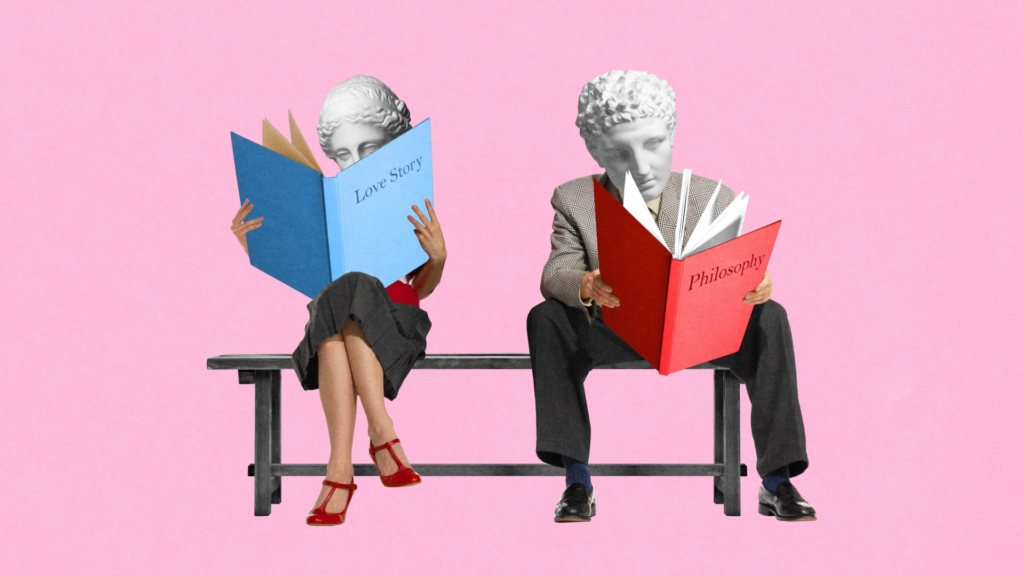
Steiner observed that modern civilisation increasingly tends to think through abstract ideological frameworks rather than through living reflection. When ideas become rigid systems, they can lose contact with the deeper human values that originally gave rise to them. For example, when political ideas harden into fixed ideological positions, the human realities they are meant to address can fade from view. Complex social questions become reduced to rigid doctrines, and the consequences are often a loss of compassion, a diminished capacity to understand opposing experiences, and a form of political thinking that risks becoming increasingly impersonal or even inhumane. In archetypal terms, this can be understood as the weakening of the integrative principle — the Jupiterian capacity for wisdom, perspective, and humane judgement that allows competing viewpoints to be held within a larger understanding.
Whether or not one accepts Steiner’s metaphysical interpretation, the observation remains pertinent. Much contemporary political debate takes place within competing conceptual models that struggle to recognise the archetypal virtues they represent.
The crisis of politics may therefore also be a crisis of consciousness.
If stability, freedom, and wisdom are all necessary for the flourishing of society, the task is not to eliminate disagreement but to cultivate the capacity to perceive how these virtues interact.
Toward a New Balance
Plato believed that the health of a society depends on the presence of individuals capable of seeing the whole rather than defending a single faction. Their role is not to abolish conflict but to maintain harmony between the forces that animate collective life.
Astrology offers a similar insight. A birth chart does not ask which planet is correct. Each planetary force has its place within the greater pattern. In the same way, a healthy society does not eliminate competing impulses but learns how to hold them in creative tension.
This raises an important practical question: how might such balance be restored?
At a cultural level, it begins with recognising that opposing political positions often arise from legitimate virtues. When we learn to ask which virtue is being defended here rather than immediately judging the position itself, the possibility of understanding begins to reopen. Preservation may be protecting stability; liberation may be seeking justice or renewal; integration may be attempting to reconcile both.
At a personal level, balance requires cultivating the very archetypal qualities that have become scarce in public life. Jupiterian wisdom comes from widening our perspective, understanding historical context, and resisting reductionist ideological thinking.
Venusian awareness encourages goodwill, empathy, and relational understanding — the willingness to recognise the humanity of those we disagree with and to value harmony without abandoning truth.
At an institutional level, societies may need to rediscover mechanisms that support the integrative function that two‑party systems often suppress. This may include stronger traditions of cross‑party cooperation, citizen assemblies, independent advisory bodies, or leadership that explicitly seeks synthesis rather than polarisation.
None of these changes are purely political. They are also psychological and cultural. They require a shift in consciousness away from identification with rigid ideological camps and toward a deeper awareness of the forces that shape collective life.
In times of upheaval, the temptation is often to double down on certainty. But moments like this call instead for imagination, humility, and the courage to rethink inherited structures. Signs of this process may already be visible in the recent rise of smaller or fringe political parties. These movements often emerge where the dominant parties are perceived to no longer reflect the concerns present within society. In many cases the established parties themselves are increasingly viewed as outdated or insufficiently responsive to rapidly changing social realities. As societies become more pluralistic, the idea that two broad political camps can adequately represent the full spectrum of public interests becomes more difficult to sustain.
This development raises deeper questions about the structure of political systems themselves. Symbolically, this moment coincides with the recent meeting of Saturn and Neptune at 0° Aries — an alignment often associated with the dissolution of old structures and the imagining of new institutional forms. If societies are indeed becoming more diverse in outlook, identity, and priority, then political institutions designed around binary competition may struggle to reflect that complexity. Electoral systems based on proportional representation, for example, are sometimes proposed as a way of allowing a wider range of perspectives to be represented within governance. But such systems also carry risks: a proliferation of parties can fragment the political landscape, complicate decision‑making, and make stable governance more difficult.
The challenge then is not simply the multiplication of voices but the creation of political structures capable of integrating them — structures that can hold diversity without collapsing into paralysis or polarisation.
Civilisations endure not through the triumph of a single principle but through the effective interplay of multiple virtues. Stability must protect what is valuable. Freedom must allow renewal. Wisdom and compassion must bind the whole together.
The task before us therefore is less about winning political arguments and more about cultivating the qualities of consciousness that allow these forces to coexist. Moments such as the Saturn–Neptune conjunction at the beginning of a new zodiacal cycle remind us that history is not only something that happens to us; it is also something that we can consciously participate in. If this time represents a threshold, then the restoration of balance becomes an active choice — one that begins not only in institutions, but in how we learn to think, relate, and act within the shared life of society.
[1] Polarities in the Evolution of Mankind, GA 197, 1920, Stuttgart
Discover more from Jennie Thomas
Subscribe to get the latest posts sent to your email.